Cognitive vocal pedagogy • Bel canto • Research • Rehabilitation
A singular vocal method where personal experience, ancestral tradition, artistic excellence, scientific discovery and individual fulfillment meet.
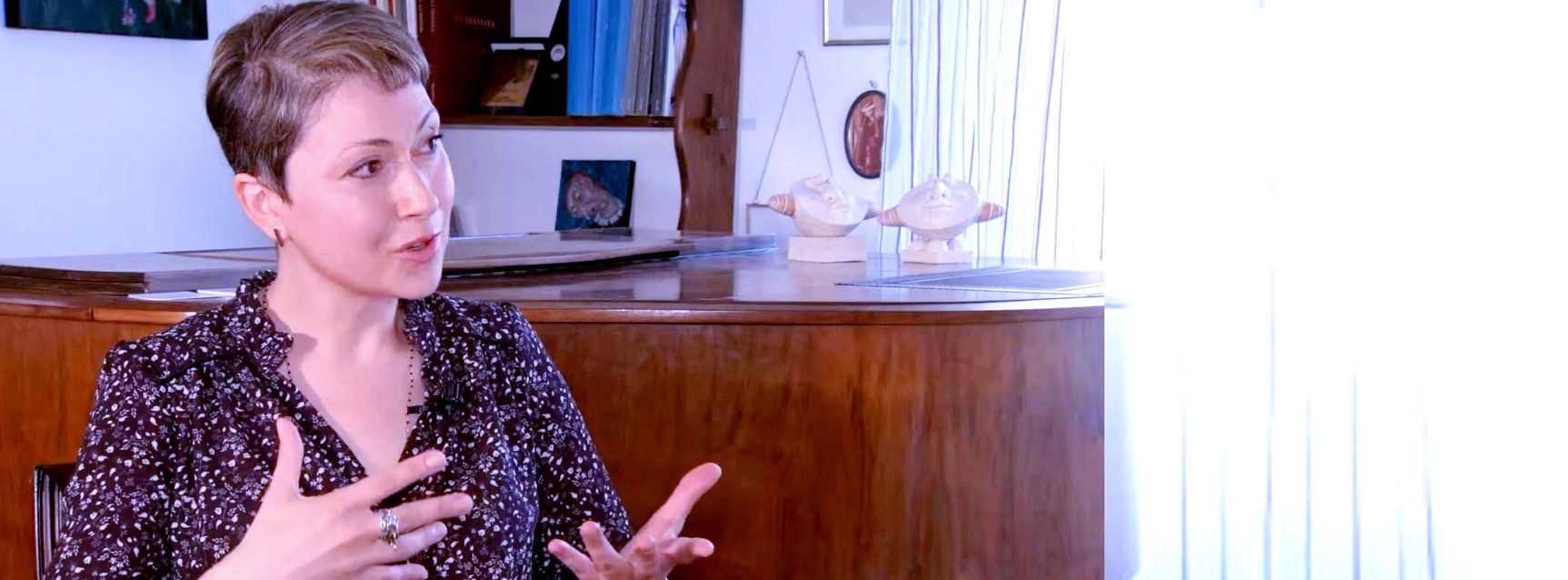
The Sarkissian Method® is a cognitive approach to sung and spoken voice created by French-Armenian mezzo-soprano, pedagogue and researcher Mariam Sarkissian after a long post-traumatic vocal, mental and physical self-reeducation following a serious car accident. It draws on bel canto principles and trains the voice through mental neuroscientific tools intended for singers, actors, teachers, business people, professional speakers and curious amateurs.
Rooted in bel canto tradition
Born from personal vocal, mental and physical reconstruction
Developed through teaching, transmission, books, and research
Why it stands out
Not a generic “voice coaching” offer, but a cognitive method with its coherent ecosystem.
The method links professional vocal technique, artistic education, workshops, research, certified teachers, trainings, books, and Vocal Cognitive Stimulation® in one clear universe.
ArtOpera, theatre, chamber music, cabaret, pop, jazz.
CareReeducation, rehabilitation, voice wellbeing, cognitive comfort and emotional balance.
ResearchBel canto tradition, holistic tools, cognition, pedagogy, neuroscience.
ProofInstitutional partners, student success stories, testimonials and reviews, books, CDs, critical acclaim and awards.
FAQ
The essential questions, answered clearly
Discovering the Sarkissian Method®.
The Sarkissian Method® is the first cognitive vocal technique method for sung and spoken voice created by Mariam Sarkissian after a long post-traumatic self-reeducation following a serious car accident. It belongs to cognitive pedagogy and neuroscience, and is structured around a central pedagogical tool: the Sarkissian Triangle®. The method identifies separately technical thought and creative thought, so that vocal training action can be concrete and conscious, in order to create effective executive automatisms to serve optimally the creative thought and allow autonomy.
The method is intended for singers, actors, teachers, speakers, children, adult amateurs and professional voice users, as well as people in periods of vocal rebuilding and neurodivergent students (dys desorders, ADHD, autistic spectrum profiles) of different ages and levels.
The method proposes a common technical language between teacher and student, with simple mental algorithms that train the executive mechanisms of vocal action. Thanks to its main pedagogical tool, this is the first method to be transmitted in its original form to everyone who practises it.
The Sarkissian Triangle® (also called the Balance Triangle or vocal Triangle) is the central educational tool of the method. It brings together the main elements of professional vocal technique and places them in a coherent relation of interdependence. In practical terms, it serves as the executable mental algorithm of technical thought, helping the student understand how to organise action in order to realise effectively an artistic, musical or verbal intention.
In the method, creative thought refers to the original artistic or verbal idea: what one wants to express. Technical thought refers to executive mechanisms needed to realise the creative thought physically. The method identifies them separately in order to build, balance and connect them more effectively.
No. The method is rooted in the bel canto tradition, but its technical base is valid for all styles, because the key elements that define style relate to creative thought.
Yes. The method is intended not only to form and optimize the vocal instrument, but also to reeducate it. This applies to sung and spoken expression. Its origin in post-traumatic self-reeducation is central to the way it frames rebuilding, reliability, clarity and progressive technical retraining.
Yes. The student is meant to acquire simple, precise mental technical tools that can be trained and reused independently. The method presents technique not as a mystery dependent on physical condition, the weather or charisma, but as something that can be understood, practiced and controlled through repeatable cognitive work.
It is possible for non-beginners who are able to distance themselves from technical instructions that are incompatible with the method, that has its own coherent logic. In other words, compatibility depends on the student’s level and on whether technical frameworks conflict.
Yes. The method can help when intonation and rhythm problems are linked to a disconnect between musical thought and technical executive mechanisms. In that framework, the issue is not reduced to the ear alone, but to the coordination between intention and execution.
Schools
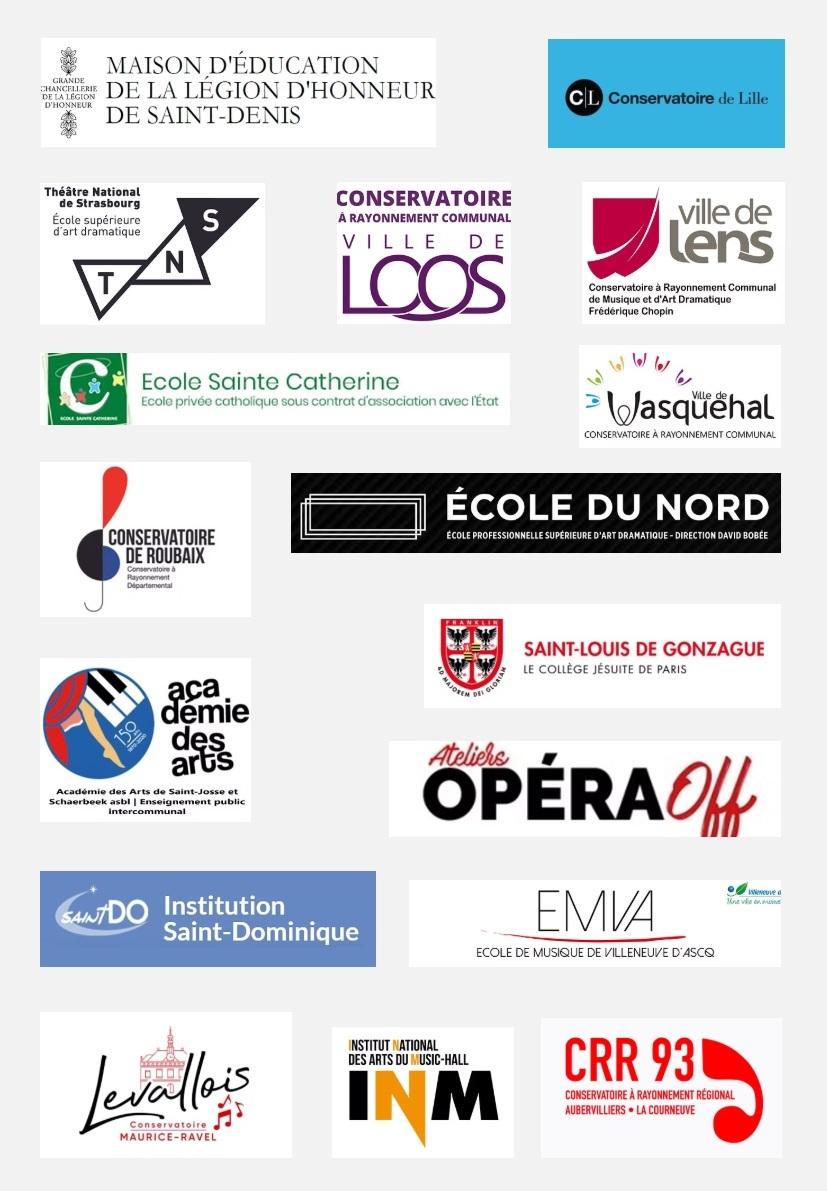
The method welcomed by institutions
In Atelier Sarkissian in Paris and through the training organisation Opera Off, Mariam Sarkissian trains numerous artists and teachers in her method.
Vocal technique for all profiles
Since 2015, the Method has been taught by Mariam Sarkissian and her 18 certified student-teachers in 17 public and private institutions in France and Belgium, as well as in workshops and masterclasses and with choirs and vocal ensembles, working with both neurotypical and neurodivergent students.
Mariam Sarkissian teaches at the Atelier Sarkissian in Paris, as well as on courses and in masterclasses, either on her own or accompanied by her students, who have been trained to teach her method.
VCS®
Vocal Cognitive Stimulation®
A branch of the Sarkissian Method® that uses the voice as a practical tool to strengthen cognitive functions, regulate emotional states and reconnect purpose, intention and action.
A voice practice for more than performance
VCS® was conceived by Mariam Sarkissian as a holistic practice based on listening, imagination, vocal exercises and guided attention. VCS® supports clearer thinking, better emotional balance, stronger focus and a more coherent relationship to concrete goals.
It can be practiced in individual or group sessions through both passive listening and active guided vocal work, mental and physical. It belongs to a wider educational and artistic ecosystem while opening toward vocal wellbeing, emotional balance and mental hygiene.
Core idea
The position of the voice reflects the position of vital energy.
Central tool
The Sarkissian Triangle® connects technical thought, physical execution and creative aim in a trainable framework.
Use cases
Creation, public speaking, mental clarity, emotional regulation, achieving goals, increasing efficiency, improving confidence, and more grounded day-to-day action.
Atelier
The Atelier Sarkissian in Paris
Based near Denfert-Rochereau in Paris, the Atelier Sarkissian is a place for advanced vocal training, cognitive refinement and sustainable artistic development through the Sarkissian Method®.
A place for voice, thought and artistic balance
At the Atelier Sarkissian, singing lessons and vocal technique sessions are rooted in the Sarkissian Method®, the first cognitive method for spoken and sung voice. The work connects creative idea, technical mechanisms and vocal practice so that the voice becomes a concrete path toward expressive freedom.
In a time shaped by AI, screens, acceleration and mental overload, the Atelier offers a calm space of reconnection with our humanity through the voice: a place where technique serves not only the high performance, but also mental appeasement and emotional balance.
Who it welcomes
The atelier works with lyrical and non-lyrical singers, actors, speakers, teachers and other intensive voice users, from beginners to professionals. It also welcomes people with vocal fragility as well as neurodivergent profiles, including dys disorders, ADHD and autistic spectrum profiles.
How the work happens
Lessons are built around the Sarkissian Triangle, the central educational tool of the method, which helps students to identify and practice the technical elements so that they can use them effectively to give shape to their creative thinking. Sessions take place individually or in small groups.
What makes it distinctive
The strength of the Atelier lies in its structured cognitive teaching approach, its focus on building a solid technical foundation, and the natural integration of VCS® into every lesson. Professional vocal technique — which leaves no room for chance, whether in its teaching or its practice — becomes accessible to everyone.
Books
Books that embody the method in language, memory and form
These books do more than accompany the method: they give it narrative depth, conceptual clarity and a distinctive authorial voice.
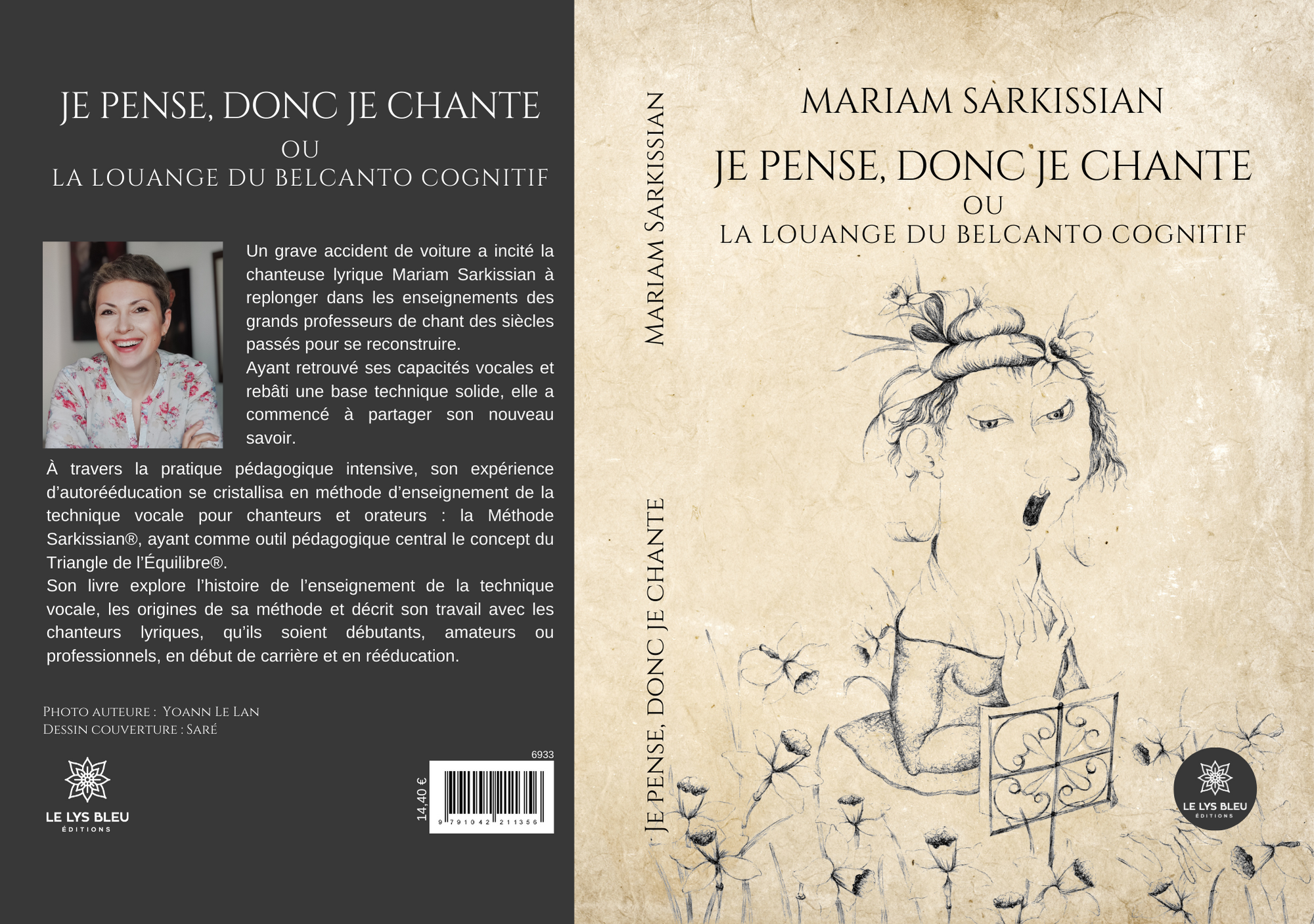
I think, therefore I sing
Both autobiographical narrative and vocal technique manual, this book explains how Mariam Sarkissian rebuilt her voice after a serious accident and gradually developed the Sarkissian Method®. It introduces the central tool of the method, the Triangle de l’Équilibre®, as a way to organise creative thought, technical thought and physical gesture.
The book presents transferable mental frameworks for vocal work while also linking technique with attention, memory, organisation and creativity. In that sense, it already shows Vocal Cognitive Stimulation® in action through pedagogy, lived experience and structured transmission.
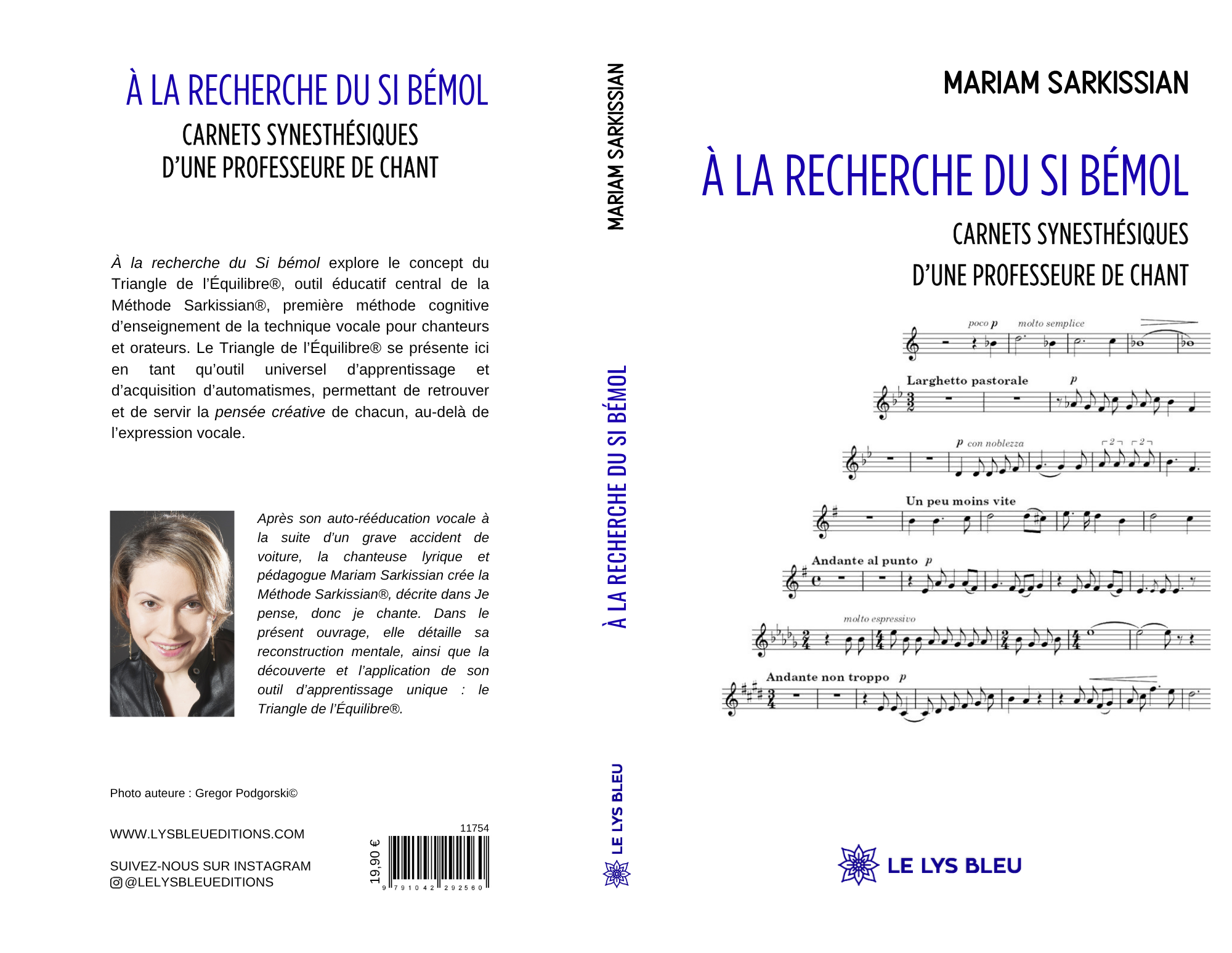
In Search of B-flat
This later book extends the universe of the method into a more intimate and poetic register. Through synesthetic notebooks, memories of Soviet Armenia, training years in Moscow and Paris, colours, sounds and bodily sensations, the recurring B-flat becomes at once a note, an emotional landmark and a mental anchor.
Its sensory writing gives an inner view of what Vocal Cognitive Stimulation® seeks to support: the reorganisation of inner space through the voice, the easing of post-traumatic chaos and the reopening of creative access. It strengthens the conceptual world of the method by showing its lived, perceptual and emotional dimension.